
Throughout my career, I met many leaders and worked at companies that believed fewer mistakes within a team led to better performance.
But what if I tell you it is quite the opposite?
What if making fewer mistakes stems from fear?
Fear of speaking up, fear of blame, and fear of failure?
When working in a fast-paced environment like tech, especially in startups, psychological safety is a crucial yet often overlooked leadership skill that can determine a team’s success or failure.
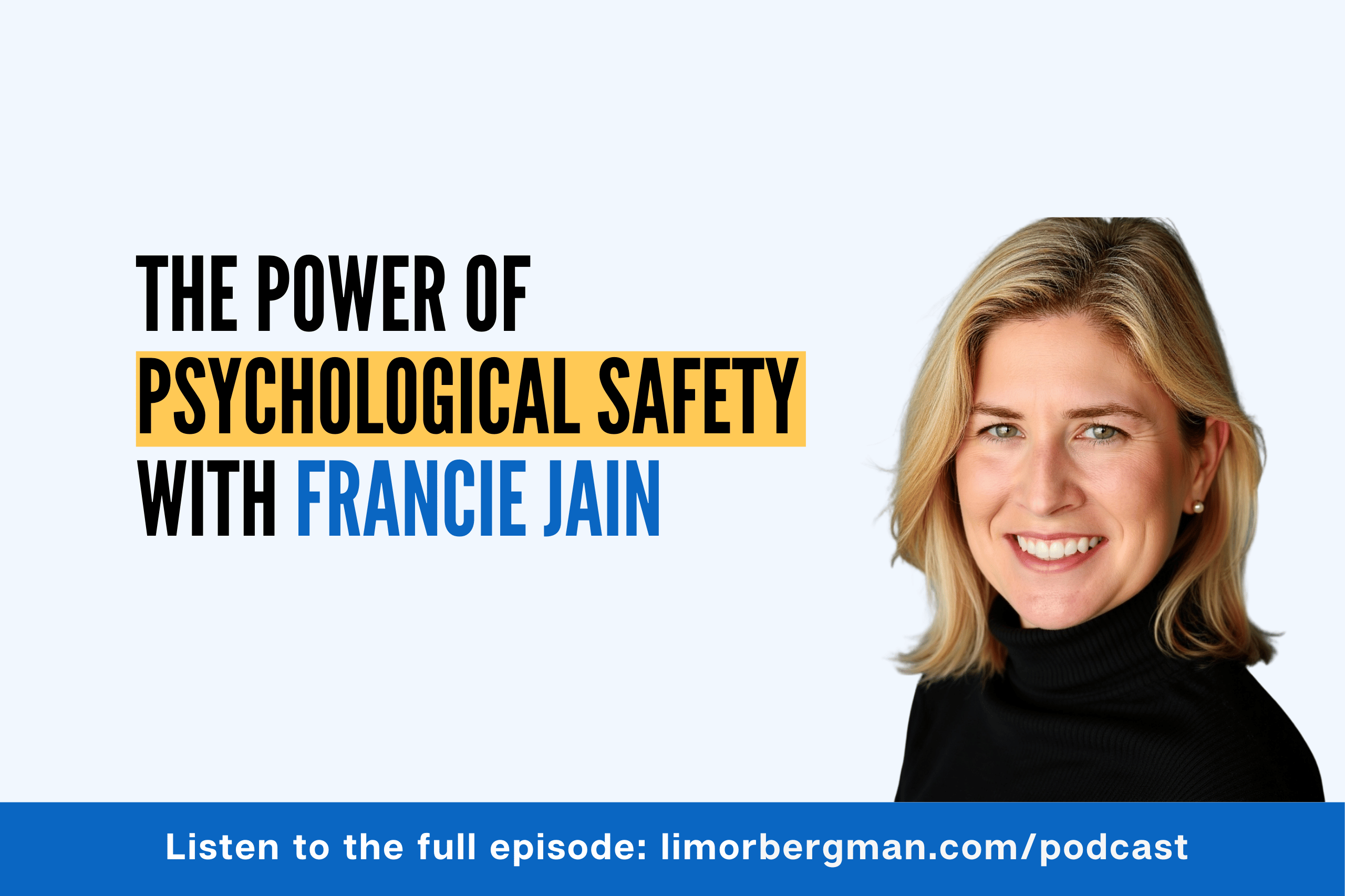
In my latest podcast episode with Francie Jain, we explored this topic.
We discussed what psychological safety truly means, why it’s essential for effective teams, how it affects employee turnover, and practical strategies for leaders to build a culture of trust and openness.
So if you are leading a team in a tech startup or work at any organization aiming for high performance, understanding and nurturing psychological safety can lead to remarkable results.
What Is Psychological Safety and Why Does It Matter?
Psychological safety was popularized by Harvard professor Dr. Amy Edmondson and refers to a team culture where:
Members feel safe to take risks, voice opinions, question decisions, and admit mistakes without fear of humiliation or punishment.
It’s not just about individual confidence; it’s a group dynamic where everyone feels respected and valued for their input.
The Core of Psychological Safety
Imagine a hospital nurse who notices a medication error but hesitates to speak up because they fear blame or retaliation.
In a low-psychological-safety environment, they might remain silent, risking patient health.
But in a high psychological safety environment, the nurse would immediately report the mistake, and the team would collaboratively address the issue without blame.
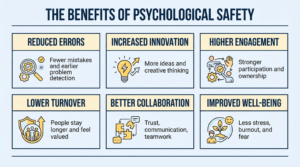
Dr. Edmondson’s research emphasizes that environments with high psychological safety report more errors,
but that’s actually a good thing.
It shows people are willing to share problems, leading to better solutions and safer processes.
Conversely, in environments lacking safety, errors are underreported, and problems persist or even worsen.
The Consequences of Low Psychological Safety
When teams lack a psychologically safe environment, employees often choose silence over speaking up. This silence can lead to:
- Increased employee frustration and disengagement
- Higher turnover rates
- Missed opportunities for improvement
- Potential safety risks in critical fields like healthcare
Key insight: Creating psychological safety isn’t about eliminating mistakes; it’s about creating a culture where mistakes are seen as learning opportunities, not failures to be punished.
How Psychological Safety Impacts Employee Turnover?
Research from Google’s extensive Project Aristotle found that the most successful teams shared one common trait: high psychological safety.
These teams consistently delivered better results and had lower turnover.
Read more about Project Aristotle here: https://psychsafety.com/googles-project-aristotle/
The Cost of Employee Turnover
High employee turnover is costly, financially and culturally.
Replacing employees requires recruiting, onboarding, and training, which can cost hundreds of thousands of dollars per employee.
For example, reducing turnover by even half can save organizations millions annually.
Why Does Psychological Safety Reduce Turnover?
Employees stay in environments where they feel valued and safe.
When team members are free to voice concerns and contribute without fear, they experience greater engagement, job satisfaction, and loyalty.
Conversely, a culture of blame or hierarchy creates anxiety and drives talented employees away.
The Google Study: High-Performing Teams Are Safe Teams
Google’s internal research revealed that the teams most likely to innovate and succeed were those where members felt safe to express ideas or admit errors.
Interestingly, this environment also encourages diverse perspectives, leading to better decision-making and stronger team cohesion.
Practical Steps to Foster Psychological Safety in Your Team
Creating a culture of trust is within every leader’s reach.
Here are actionable strategies:
1. Encourage Openness and Transparency
- Regularly invite team members’ input, especially on decision-making.
- Model vulnerability by admitting your own mistakes or uncertainties.
- Share your thought process openly to set a tone that mistakes are part of the growth process.
2. Recognize and Respect Different Perspectives
- Encourage diverse opinions, especially from quieter or junior team members.
- Protect dissenting voices and make it clear that challenge is welcome.
- Use techniques like “round-robin” discussions to hear everyone.
3. Build Accountability, Not Blame
- Frame mistakes as learning opportunities (“What can we learn from this?”) rather than failures.
- Create a blameless incident-reporting system, as Dr. Edmondson’s research highlights, safety cultures report more errors, which helps improve overall safety and performance.
4. Lead by Example
- Leaders must demonstrate psychological safety through their actions.
- Respond positively when team members challenge ideas or admit errors.
- Celebrate transparency and effort, not just results.
5. Invest in Education and Culture Change
- Conduct workshops or training to help teams understand and practice psychological safety.
- Share success stories where openness led to breakthroughs.
- Recognize and reward behaviors that promote trust and collaboration.
The Myth of Perfection and the Reality of Continuous Improvement
It’s a common misconception that safe environments mean avoiding errors altogether.
But research by Dr. Edmondson shows that high psychological safety environments actually report more errors
Because team members are confident to speak up.
Error reporting isn’t a sign of failure; it’s a sign of a healthy, accountable culture.
Organizations that embrace this mindset are better at diagnosing issues early and implementing solutions.
How Leaders Influence Psychological Safety
Leadership behavior is the most powerful factor in shaping safety culture.
Leaders who:
- Welcome questions and feedback
- Avoid blame and punishment
- Promote continuous learning
- Show genuine care for team members’ well-being
Will foster environments where employees feel safe to voice concerns and innovate.
Changing the Culture: It’s Possible and Necessary
Many assume that organizational culture is fixed or uncontrollable.
But as Francie Jain, CEO of Terawatt, emphasizes, culture can change.
Education, awareness, and deliberate effort make it possible to shift toward safer, more trusting environments.
Even if your team is currently toxic or hierarchical, small, consistent actions, such as encouraging open dialogue or modeling transparency, can lead to transformation.
Focus on the Team, Not the Organization Alone
Diverse, psychologically safe teams are often more productive and innovative, even within broader organizational cultures that are less ideal.
Leaders who invest in small, specific team-level changes can generate remarkable results.
Why Psychological Safety Is Essential for Your Leadership Success
The stakes are high. Research consistently links psychological safety to
lower employee turnover, higher innovation, and better overall team performance.
Leaders’ behaviors directly impact this culture; intentional actions can reinforce safety or undermine it.
Final Takeaways
-
Assess your environment: Do team members feel safe to speak up? Use honest questions to evaluate.
-
Model the behavior: Transparently admit mistakes and welcome challenges.
-
Foster diversity of thought: Encourage different perspectives to improve decision-making.
-
Shift from blame to accountability: Make errors a learning opportunity.
-
Lead by example: Your actions set the tone for psychological safety.
Want to Build a Safer, More Engaged Team?
Creating psychological safety isn’t a one-time effort; it’s a continuous journey.
Start today by asking yourself, “Do my team members feel safe to be their authentic selves?”
Remember, high-performing teams aren’t about perfection; they’re about safety, trustworthiness, and continuous learning.
Next step:
Implement one new practice this week, whether it’s inviting anonymous feedback, sharing a personal mistake, or recognizing someone’s courageous input.
Watch how your team responds.
For a deeper dive into the impact of psychological safety on organizational success, check out Amy Edmonson’s website.
And listen to the full episode with Fancie:
Frequently Asked Questions
What are some signs that my team lacks psychological safety?
If team members rarely voice concerns, avoid challenging ideas, or hesitate to admit mistakes, it’s a sign of low psychological safety. A culture where blame is frequent or silence is the norm also indicates issues.
How can I improve psychological safety if it’s already low?
Start small: model vulnerability, invite feedback, recognize contributions, and create a blameless environment. Training sessions and open discussions can promote awareness and change.
Is psychological safety only important in healthcare or tech?
Not at all. All organizations — from education to finance to retail — benefit from high psychological safety. It fosters trust, accountability, and innovation everywhere.
Can you have psychological safety in hierarchical organizations?
Yes, but it requires deliberate effort from leadership to create inclusive practices and empower lower levels of the hierarchy to speak up without fear.
How does diversity influence psychological safety?
Diverse teams bring different perspectives, which can challenge groupthink and foster richer discussions. Inclusion ensures all voices are heard and valued, strengthening the safety culture.
Transform your team with psychological safety — the secret ingredient for reducing turnover, boosting innovation, and creating a resilient, high-performing organization. Start today, and watch your culture thrive!
Summary:
Developing psychological safety in your team fosters trust, encourages open communication, reduces employee turnover, and cultivates innovation.
Through deliberate leadership behaviors and cultural shifts, you can create an environment where team members thrive, and organizational goals are achieved.
About the Guest
Francie Jain is the founder & CEO of Terawatt, a B2B marketplace that helps healthcare organizations reduce turnover through expert-led group coaching.
She is committed to transforming how employers understand the relationship between professional development and employee retention.
Before launching Terawatt, she founded West River Partners, a consultancy that raised capital for emerging markets-based equity hedge funds.
Francie holds an AB from Princeton University and an MBA from the University of Chicago Booth School of Business, where she refined her expertise in data and analytics to drive strategic decisions.
Want More Personal Stories & Deeper Insights?
I share my more intimate stories, behind-the-scenes reflections, and personal career lessons on Substack.
It’s the best place to have real conversations with me.
 Join me on Substack:
https://limorbergman.substack.com/
 Stay Connected
 Podcast hub: https://limorbergman.com/podcast
 LinkedIn: https://www.linkedin.com/in/limorbergman
 Instagram: @limorbergman
 YouTube: @LimorBergman