
You’re delivering results. You’re managing complex teams. You’re showing up every single day. But somewhere along the way, you started wondering if leading at this level means losing the parts of yourself that actually matter, your family, your values, the way you naturally lead.
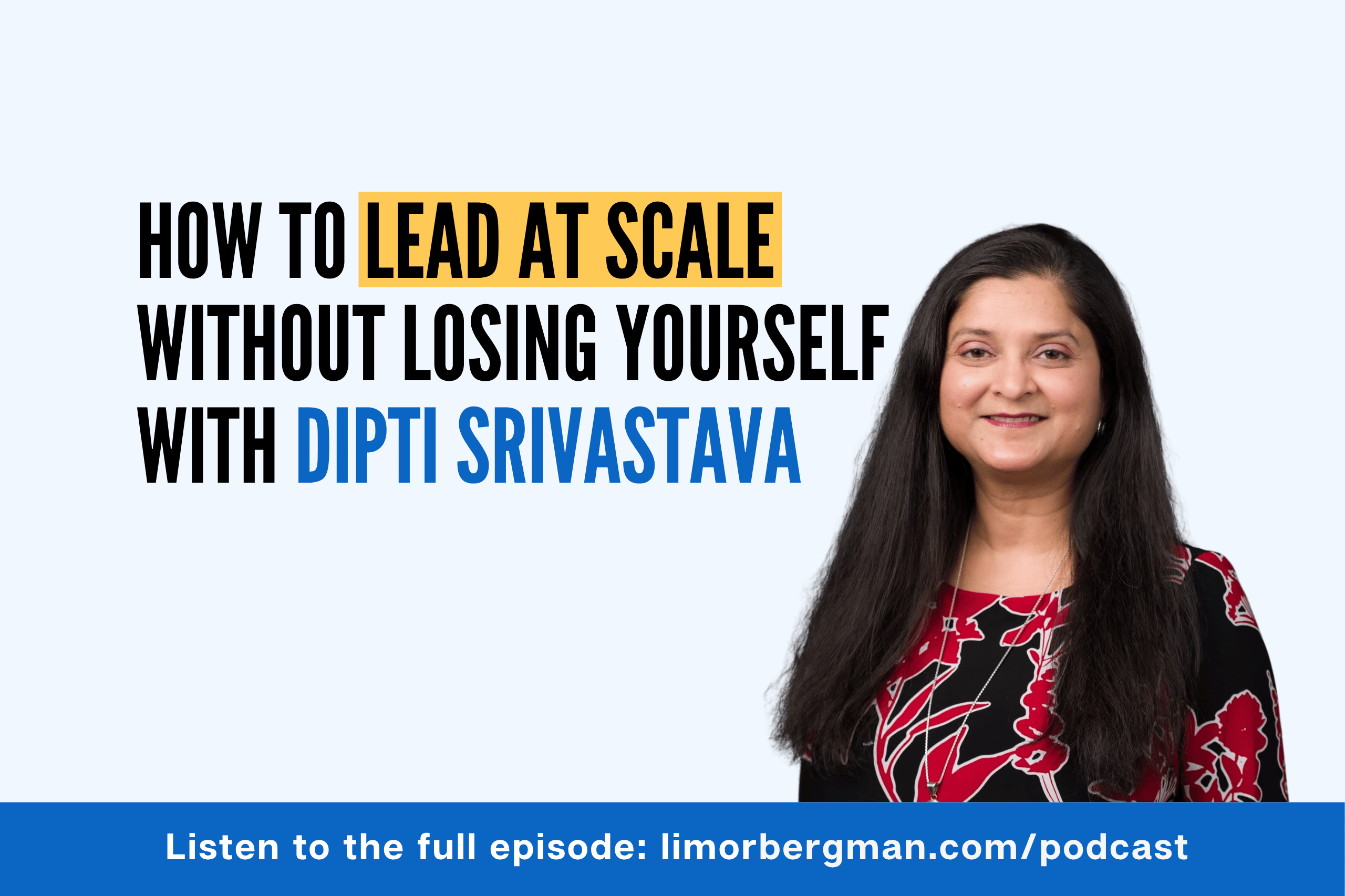
In this episode of From a Woman to a Leader, I sat down with Dipti Srivastava, a technology leader with over 15 years of experience building and scaling cloud-native platforms and data-driven systems across SaaS, infrastructure, and AI. She has led global engineering organizations, managed 14+ enterprise product teams, and raised a family through all of it. And she did it without becoming someone she’s not.
What struck me most about our conversation was how grounded her approach to leadership is. She didn’t talk about hustle or sacrifice. She talked about clarity, trust, structure, and seasons.
Listen to the full episode: https://limorbergman.com/podcast/
1. How Do You Navigate Career and Family Without Feeling Like You Have to Choose?
This was the question that opened the deepest part of our conversation. Dipti said something I keep coming back to:
“It was important as a woman for me not to treat those as competing priorities, but as different seasons in my life that shaped how I lead with empathy.”
Seasons. Not sacrifices.
So many women in engineering leadership feel like they need to choose. Career or family. Growth or presence. Ambition or motherhood. Dipti rejects that framing entirely.
She and her husband moved through each season together with discipline and intentionality. They prepped food on weekends. They never changed jobs in the same year. They structured their lives so both of them could show up fully in whatever season they were in.
Dipti also talked about how the seasons when she was focused on family taught her empathy and patience that showed up later in how she leads teams. The years when she was building at scale taught her resilience and clarity. None of it was wasted.
That’s not “having it all.” That’s being intentional about what matters in each season and trusting that the seasons build on each other.
How to apply this
Ask yourself: what season am I actually in right now? Not the season you wish you were in. Not the season LinkedIn tells you you should be in. The one you’re living. Then ask: what does success look like in this specific season? If you’re in a family-focused season, success might be a role with flexibility, not the next promotion. If you’re in a growth season, success might mean going after the Director role and saying that out loud. Each season has its own definition, and borrowing from a different season will make you miserable.
2. What Does Real Empowerment Look Like When You’re Leading at Scale?
Dipti made a distinction that I think a lot of leaders miss. Empowerment is not just giving people freedom. It’s giving them freedom within a framework.
“Empowerment does not just come like that. It comes from two things. Trust and structure.”
When you trust your team but don’t give them structure, they feel abandoned. They don’t know what good looks like. They’re afraid to make decisions because they’re not sure what the boundaries are. That’s not empowerment. That’s neglect dressed up as autonomy.
When you give them structure without trust, they feel micromanaged. They stop bringing ideas. They execute but they don’t own.
The leaders who get this right do both. They set clear expectations, create systems for ownership, and then step back and let their teams deliver. Dipti described how she builds operating models that give teams clarity on what they own while trusting them to figure out the how.
This is especially important for women moving into Director and VP roles, where your job shifts from doing the work to building the systems that let others do the work. The instinct to stay close to the details is strong, especially if that’s what got you promoted. But at scale, your leverage comes from the system you build, not the work you do yourself.
How to apply this
Think about one team or person you manage. Do they have both trust and structure? Can they clearly articulate what they own and how success is measured? If you’re not sure, ask them. A simple question like “do you feel clear on what’s expected of you and empowered to make decisions?” will tell you exactly where the gap is.
3. Can You Have Both Psychological Safety and Accountability on the Same Team?
Another idea Dipti brought up that I think is underappreciated: psychological safety and accountability are not opposites. They work together.
“Psychological safety enables people to bring problems early on. And accountability’s responsibility for the outcomes, not just the output.”
This is a critical reframe. Most leaders think of psychological safety as the “soft” side and accountability as the “hard” side. And they think you have to choose one or lean toward one.
Dipti is saying something different. Teams that feel safe enough to raise problems early are the teams that actually deliver. Because the problems get surfaced when they’re still small, when you can still do something about them. And accountability doesn’t mean tracking whether someone shipped a feature. It means asking whether the customer actually benefited from what was built.
This shifts the entire conversation from “did you finish the task” to “did we solve the problem.” And that shift changes how teams show up.
How to apply this
In your next team meeting or one-on-one, try asking: “What’s one thing that’s not working right now that we haven’t talked about?” Then listen. Don’t fix it immediately. Don’t explain why it’s that way. Just listen. That single question, asked consistently, builds the safety that lets your team bring you the truth before it becomes a crisis.
4. Do You Need to Change Who You Are to Lead at Scale?
This is the one I keep coming back to. Dipti said:
“You really don’t need to change the way you lead. You need to be authentic, be confident in your skin. And you don’t need to be louder or tougher because I never was.”
She said this as someone who leads 14+ product teams. Who has navigated global teams and large-scale platform transformations. Who grew up in a small town in India where engineering was considered a field for boys.
And her message is clear: your natural leadership style is not a limitation. It’s your advantage.
For women in tech who have been told, directly or indirectly, that they need to be more aggressive, more visible, more like someone else, this is permission to lead as yourself. And it works. Not because it’s easier, but because authenticity builds trust faster than any performance ever will.
I see this pattern constantly in my coaching practice. A woman comes to me wanting to “executive presence” her way into the next role. She thinks she needs to be louder in meetings, more political, more like the men around her. And what we discover together is that the qualities she’s trying to suppress, her thoughtfulness, her ability to listen, her collaborative instinct, those are exactly what makes her an effective leader. She just needs to own them instead of apologizing for them.
How to apply this
Write down three leadership qualities that come naturally to you. Not the ones you think you should have. The ones that are already there. Then ask yourself: am I leaning into these, or am I trying to suppress them because they don’t match what I think leadership should look like? Your authentic style is not the thing holding you back. It might be the thing that sets you apart.
5. When Should You Step Into Leadership, Even If You Don’t Feel Ready?
Dipti opened our conversation with a line that set the tone for everything:
“Leadership isn’t something you are granted when conditions are perfect. It is something you actually step into.”
She described how she found the gaps, the places where leadership was needed but no one was stepping up, and she inserted herself there. Not because she had the title. Not because she had permission. Because the work needed doing and she could see what needed to happen.
“You find the gap. You insert yourself there.”
You don’t need the perfect title. You don’t need everyone’s approval. You don’t need to wait until you feel 100% ready. You step in. And then you figure it out.
That’s how Dipti built her career. And that’s how the women I coach build theirs. The ones who get promoted to Director and VP aren’t the ones who waited for someone to tap them on the shoulder. They’re the ones who saw an opportunity and stepped in before they felt fully ready.
How to apply this
Identify one gap in your organization right now. A project that needs leadership. A cross-functional problem no one is owning. A team that needs someone to step up. You don’t need to take it all on. But you can raise your hand for it. You can say “I see this, and I’d like to help lead it.” That single act of stepping in, before you feel fully ready, is what builds the track record that gets you to the next level.
Why the Most Capable Women Often Stay Stuck the Longest
There’s a pattern I see in my coaching practice that connects directly to everything Dipti shared. The most capable, hardest-working women are often the ones who stay stuck the longest.
Not because they lack skills. Not because they lack experience. But because they’re waiting. Waiting to feel more confident. Waiting for the right moment. Waiting for someone to tell them they’re ready.
And while they wait, they keep doing excellent work. They keep saying yes. They keep proving themselves. And they keep wondering why the promotion isn’t coming.
The women who move into Director and VP roles are not more qualified. They just stopped waiting. They started treating their careers like seasons, not a single timeline. They built systems of trust and structure instead of trying to do everything themselves. They led as themselves instead of performing a version of leadership. And they stepped in before they felt ready.
That’s what Dipti did. And that’s what’s available to you too.
Listen to the full conversation with Dipti: https://limorbergman.com/podcast/
Or watch on YouTube:
Listen to my solo episode on The Seasons of Your Career [Airs Friday, April 10]: https://limorbergman.com/podcast/
Read my personal essay on this topic: The Seasons of Your Career (And the Guilt That Doesn’t Belong in Any of Them)
You Don’t Have to Figure This Out Alone
If you’re reading this and recognizing yourself in these patterns, if you’ve been delivering results, leading teams, doing everything right on paper, but feeling stuck or wondering what’s next, this is exactly what I help women work through.
I coach women in tech and engineering leadership who are high-performers, the ones who are more than capable but navigating seasons, transitions, and the question of how to get to the next level without losing themselves in the process. Together we work on visibility, promotion strategy, self-advocacy, and building a career that fits your real life, not someone else’s timeline.
If that’s you, book a promotion strategy call and let’s figure out your next move.
About Dipti Srivastava
Dipti Srivastava is a technology leader with over 15 years of experience building and scaling cloud-native platforms and data-driven systems across SaaS, infrastructure, and AI. She has led global engineering organizations and is passionate about designing systems that enable clarity, ownership, and sustainable execution.
Connect with Dipti:
LinkedIn: https://www.linkedin.com/in/diptishrivastav/
Website: https://sites.google.com/view/diptisrivastava/home
Frequently Asked Questions
How do you lead at scale without micromanaging?
The key is building systems that combine trust and structure. Set clear expectations and success metrics for your teams, create operating models that define ownership, and then step back. Your role at scale is to build the system, not to do the work. As Dipti puts it, empowerment comes from two things: trust and structure. Without both, teams either feel abandoned or micromanaged.
How do you balance career and family as a woman in tech leadership?
Stop thinking of it as balance and start thinking of it as seasons. Some seasons are family-focused, and success might mean stability and flexibility. Other seasons are growth-focused, and success might mean pursuing the next role aggressively. The women who navigate this well are intentional about which season they’re in and define success within that season instead of borrowing the definition from someone else’s timeline.
What does empowerment actually look like in engineering teams?
Real empowerment is not just giving people autonomy and walking away. It requires both trust and structure. Teams need to know what they own, how success is measured, and what the boundaries are. Within that framework, they need the freedom to make decisions and figure out the how. When this is done well, decisions happen faster because people know what they’re accountable for.
Can you have psychological safety and accountability at the same time?
Yes, and you should. Psychological safety means people feel safe bringing problems early, before they become crises. Accountability means people own the outcomes, not just the output. These two things reinforce each other. Teams that feel safe surface issues faster, which means they deliver better results. The question shifts from “did you finish the task” to “did the customer actually benefit.”
Do women need to change their leadership style to advance in tech?
No. Dipti Srivastava led 14+ product teams without becoming louder or tougher. She led as herself. The qualities that many women think are holding them back, thoughtfulness, collaboration, empathy, are often the exact qualities that make them effective at scale. Authenticity builds trust faster than any performance. The work is not to change your style but to own it with confidence.
How do you know when to step into a leadership opportunity?
If you’re waiting to feel fully ready, you’ll wait too long. Leadership isn’t granted when conditions are perfect. It’s something you step into. Look for gaps in your organization, projects that need ownership, cross-functional problems no one is solving. Raise your hand before you feel 100% prepared. That’s how you build the track record that gets you to the next level.
What are the signs you’re stuck in your career as a woman in tech?
Common signs include: consistently delivering strong results without being promoted, saying yes to everything without getting recognition for it, comparing your timeline to colleagues who have different life circumstances, and waiting for someone to tell you you’re ready for the next step. If you recognize two or more of these, the issue is probably not your skills. It’s your strategy.
How can women in tech get promoted to Director or VP?
The women who make it to Director and VP are not more qualified than their peers. They stop waiting and start acting. They define what season they’re in and what success looks like within it. They build systems of trust and structure instead of trying to do everything themselves. They lead authentically. And they step into opportunities before they feel ready. If you’re navigating this transition, working with a coach who understands the specific challenges women in tech face can accelerate the process significantly.