You’re good at what you do. You’ve been good at it for years. And you keep waiting for someone to notice.
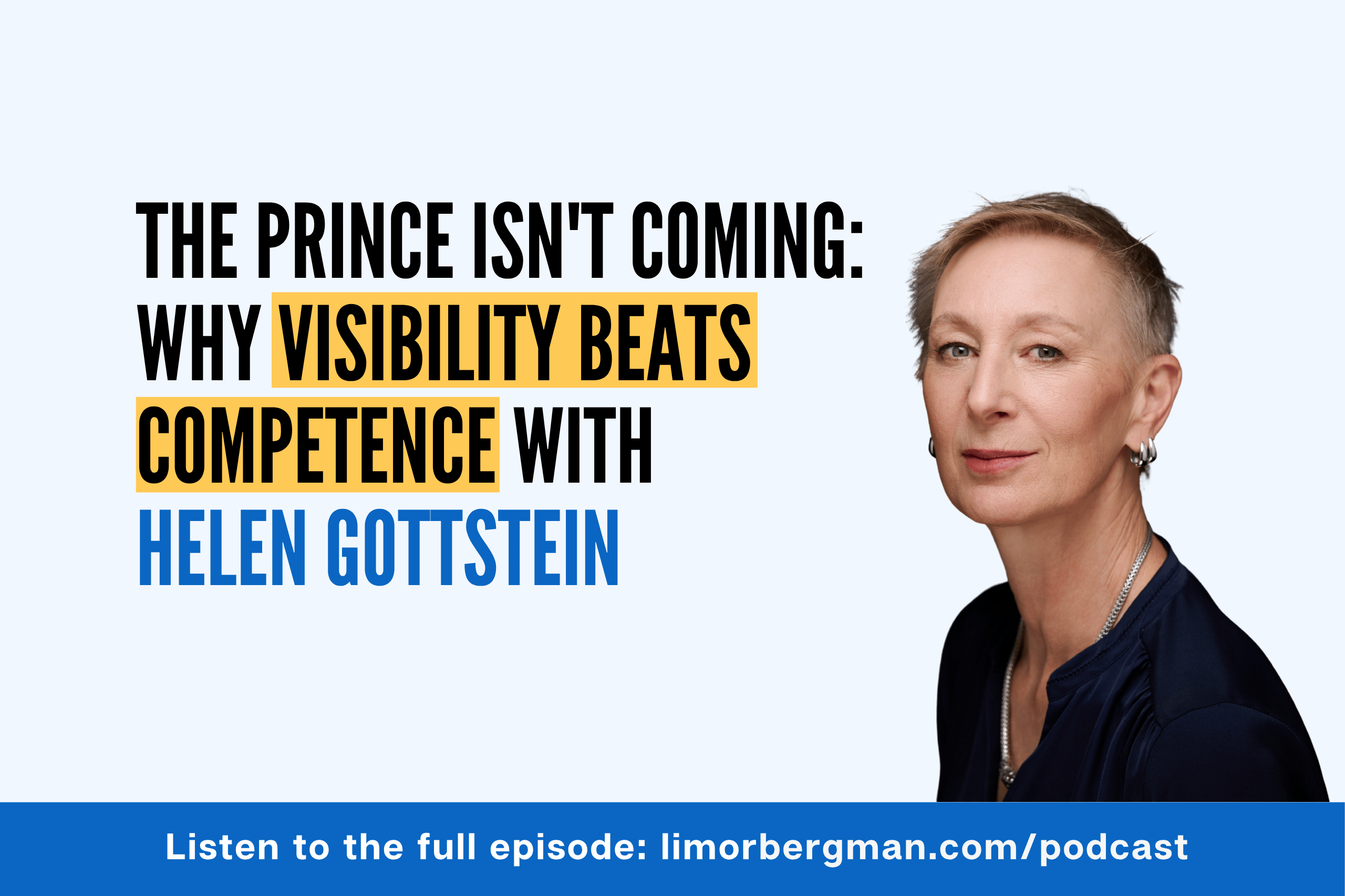
But here’s the uncomfortable truth that Helen Gottstein, TEDx mentor and founder of Loud and Clear Training, put so plainly in my podcast this week: the prince isn’t coming. Competence alone will not get you where you want to go. If you’re a woman in tech or any male-dominant field, and you’ve been relying on your work to speak for itself, this post is for you.
In our conversation on the From a Woman to a Leader podcast, Helen shared frameworks, stories, and strategies that I wish I’d had 15 years ago when I was an engineer waiting quietly for a promotion that never came. Below are the key insights from our conversation and my own speaking journey, along with concrete steps you can take starting this week.
1. The Cinderella Trap: Why Competence Without Visibility Keeps Women Stuck
Helen framed it in a way I haven’t been able to stop thinking about. She said competence is like Cinderella waiting in her home. She’s certainly qualified to be chosen by the prince. But the prince isn’t looking for her. The prince isn’t coming.
“Competence is like Cinderella waiting in her home. She’s certainly qualified on the beauty front to be chosen by the prince. Our challenge is the prince isn’t looking for us. The prince isn’t coming.”
This hit me hard because I lived it. Earlier in my career, I watched colleagues get promoted to management, people I didn’t think were more qualified than me, and I wasn’t even considered. The worst part? No one knew what I wanted because I hadn’t said it. I was waiting for my manager to notice my work and hand me the opportunity.
Many women I coach today make the same mistake. They stay heads down, rely solely on their manager to advocate for them, and avoid anything that feels like self-promotion. Then they watch less qualified colleagues get the role.
How to apply this: Stop waiting for your manager to be your prince. Visibility is not a personality trait you’re born with, it’s a skill you build. Ask yourself: do the people who make decisions about your career actually know what you want? If not, that’s your starting point.
2. The 17 Out of 20 Problem: Why Women Underestimate Themselves
Helen is currently organizing a TEDx event and has interviewed dozens of potential speakers, roughly half men and half women. The pattern she found was staggering.
Not a single man questioned whether he was the right person to speak. Not one. But 17 out of 20 women said some version of “why me? I’m sure there’s someone better qualified.”
“Not a single man person said, I’m not sure I’m the best person to speak about this topic. Not one. But 17 out of 20 women said why are you reaching out to me?”
This is the confidence gap in action. Women aren’t less competent, they just describe themselves as less competent. And that self-perception shapes everything, from whether they speak up in a meeting to whether they apply for a promotion to whether they submit a talk to a conference.
I was one of those women. When I submitted my first conference talk to JavaOne over 20 years ago, I didn’t do it because I thought I had something valuable to say. I did it because I wanted to go to San Francisco. I stood in front of 150 people and it was terrifying. But that one uncomfortable step started a journey that eventually led to paid speaking engagements.
How to apply this: The next time you catch yourself thinking “I’m not the right person for this,” pause and ask: would a male colleague with my same experience hesitate? If the answer is no, that’s your signal to go.
3. The Babel Effect: Why People Who Talk More Are Assumed to Be Leaders
Helen introduced something called the Babel effect, a bias where people who speak more in meetings are simply assumed to be more competent and more likely to be leadership material. It’s not about what they say, it’s about how much they say.
“The Babel effect, Babel bias, is the people who speak more are simply regarded as being more likely to be leadership material.”
This matters because women tend to speak less in meetings, especially in rooms dominated by loud voices and big egos. And every time they stay quiet, the Babel effect works against them. The people doing the talking get the credit, the visibility, and the leadership assumptions, even when they’re not saying anything more substantive.
How to apply this: You don’t need to dominate every meeting. But you do need to show up consistently. Helen recommends picking one agenda item per meeting that matters to you and getting ready for that one point. Prepare what you want to say. Practice out loud if it helps. Then say it.
4. How to Speak Up When You’re Introverted (Practical Strategies That Work)
Helen shared several strategies that I found genuinely useful, not vague “just be more confident” advice, but specific things you can do in your next meeting.
Speak up faster. The longer you wait between having a thought and saying it out loud, the louder the critical voice in your head gets. Helen said it simply: faster is better.
“The longer we wait between the thought that comes to us and speaking up, the more critical voice, the louder is the critical voice in our heads. So when you speak up faster, you give less chance for that critical voice in your own mind to shut you down.”
Remember there is no script. No one knows what you were going to say. They can’t judge you against words that only existed in your head. Let go of the idea that your message needs to be perfectly formed before you speak.
Stay unmuted in online meetings. Helen pointed out that the physical process of finding the unmute button, clicking it, and then deciding whether to speak creates enough friction that most women mute themselves again. If you’re in a quiet place, just stay unmuted. It removes the barrier between your thought and your voice. And it means you can’t be doing email during the meeting, which forces you to be present and engaged.
Build alliances before the meeting. If there’s something important you want to raise, talk to supporters in advance. If you know who might object, hearing their concerns beforehand helps you address them directly. This is something I’ve done myself. When I know I’m going into a meeting with a lot of strong voices, I ask an ally to call on me when the relevant topic comes up.
Land on the tail. When someone is about to finish speaking and there’s no natural gap, start speaking just before they finish. It signals “I’m next” without waiting for a pause that may never come.
Don’t give up. If you tried to say something and couldn’t get in, don’t decide there isn’t space for you. Try again. The first time the door didn’t open, the second time it might.
How to apply this: Pick one of these strategies for your next meeting. Just one. If you’ve never tried staying unmuted, start there. If you already do that, try the “land on the tail” technique. Build the muscle one strategy at a time.
5. Why Smiling Less Might Be the Most Powerful Thing You Can Do
This was the most counterintuitive insight from our conversation. Helen told a story about a woman manager at a tech company who pushed back when Helen suggested she smile less. “Smiling is part of my personality,” she said. Helen asked her, “How’s it working for you? Are you getting heard in meetings?” She wasn’t.
So the woman went to her next meeting and didn’t smile as she delivered her report. Her manager turned to her and said “good point” for the first time in two years.
“When we smile, we’re often experienced as pleasing and appeasing. Smiling less means that we experience ourselves as more competent and we’re working less hard for you to like me than I am for me to deliver my ideas clearly.”
I know this one personally. I smile when I’m uncomfortable. It’s a way of coping with the discomfort. A lot of women I’ve observed do the same thing. But that smile can signal appeasement rather than authority, and it can undermine the very message you’re trying to deliver.
How to apply this: In your next important meeting or presentation, notice when you’re smiling. Is it because you’re genuinely happy, or because you’re trying to make someone comfortable? Try delivering your key point without a smile and see how it lands.
6. The Double Standard in Promotions (and How to Navigate It)
Helen shared a story that made me sigh deeply. A woman she worked with had been asked, four months ago, to apply for a position two levels above her current role. She prepared thoroughly, had strong internal advocates, and went into her skip-level meeting ready. And she was still met with: “How come you’re applying for this?”
She had been told to apply. She did everything right. And she was still questioned for doing exactly what was asked of her.
Helen’s advice: keep asking the strategic questions. Who do I need to speak to? What has to happen? When is this likely? How do I move this forward? Don’t be Cinderella waiting for it to descend from on high.
My take is that building relationships beyond your direct manager is critical. If the people making decisions about your career already know you, they are far less likely to question your candidacy. One of the biggest mistakes I see women make, and I made this mistake myself, is relying entirely on one manager to advocate for them. That keeps you in a corner. You have to nurture relationships with skip-level leaders and others so that when the time comes, they already know who you are and what you’re capable of.
How to apply this: Identify two or three people above your direct manager who influence career decisions in your organization. Start building relationships with them now, not when you need something, but as a regular practice.
About Helen
My Own Speaking Journey: From JavaOne to Paid Speaker
I shared my full speaking journey in the companion solo episode this week, so I won’t repeat it all here. But the short version is this.
I went from being a terrified engineer who submitted to JavaOne just to visit San Francisco, to this week speaking at the ELC conference in Prague and delivering a paid engagement for a company. That path took over 20 years and included: sitting on a panel, speaking at virtual events, guesting on 20+ podcasts before starting my own, attending conferences alone as a participant, and getting rejected from Lead Dev London, Grace Hopper, and ELC itself before being accepted.
None of it felt ready. All of it felt uncomfortable. I still feel the discomfort this week in Prague. The difference is I stopped letting it decide for me.
If I could do it as an introvert, you can too.
You Don’t Have to Figure This Out Alone
If you’re reading this and recognizing yourself in these patterns, if you’ve been doing great work quietly and wondering why it’s not translating into the career growth you deserve, I want you to know you don’t have to navigate this by yourself.
I work with women in tech leadership every day on exactly these questions. How to become more visible without feeling like you’re bragging. How to stop waiting for permission. How to build a career that actually reflects what you’re capable of. If that sounds like where you are right now, let’s talk.
Book a promotion strategy call, and we’ll figure out your next step together
Tools and Resources for Getting Started
If you’re ready to take your first step toward building visibility through speaking, writing, or putting yourself out there, here are tools and platforms I’ve used and talked about in both episodes this week:
For building a speaker profile and submitting to conferences: Sessionize (sessionize.com) is where you build your speaker profile and submit CFPs (calls for papers) to conferences. Many tech conferences use Sessionize to manage submissions. You create one profile with your bio, headshot, and talk proposals, and submit to multiple conferences from the same place.
For finding speaking opportunities as a podcast guest: Podmatch (podmatch.com) matches podcast hosts with potential guests. You create a profile and apply to shows looking for guests like you. PodStar is a community where hosts actively look for guests to interview.
For practicing and improving your speaking: Riverside (riverside.fm) is what I use to record my podcast and practice talks. I pull the transcript and ask AI (I use Claude) to critique my delivery, then record again. It’s like having a speaking coach available any time.
For building visibility through writing: Substack, Medium, and LinkedIn are all solid starting points. You don’t need a separate platform. Start where your professional network already is.
For mentoring (and building your own confidence): Female Factor is one of the organizations I mentor through. Mentoring another woman is one of the best ways to realize how much you have to share.
Frequently Asked Questions
How do women in tech get heard more in meetings? Prepare for one specific agenda item in advance, practice your point out loud, stay unmuted in online meetings to remove barriers between your thought and your voice, and build alliances with supporters before the meeting. If you can’t find a gap in the conversation, use the “land on the tail” technique by starting to speak just before the current speaker finishes.
What is the Babel effect and how does it affect women at work? The Babel effect is a cognitive bias where people who speak more frequently in meetings are automatically assumed to be more competent and more likely to be leadership material. Since women tend to speak less in professional settings, this bias disproportionately works against them, regardless of the quality of their ideas.
Why do women underestimate themselves at work? Research and experience consistently show that women are more likely to question their qualifications than men. In Helen Gottstein’s experience organizing a TEDx event, 17 out of 20 women questioned whether they were the right person to speak, while zero men did. This pattern of internalized doubt leads women to wait for permission, over-prepare before acting, and avoid opportunities they’re fully qualified for.
How do you start public speaking as an introvert? Start small. Be a guest on a podcast, sit on a panel, or speak at a virtual event before attempting a solo stage talk. Practice out loud by recording yourself, and use AI tools to get feedback on your delivery. Build a support system of people who can give you honest feedback and encourage you to keep going.
How do you handle rejection when submitting to conferences? Treat rejection as part of the process, not evidence that you don’t belong. Even experienced speakers get rejected regularly. Submit to multiple conferences, iterate on your proposals, and keep track of your progress rather than focusing only on what didn’t work out.
Why is visibility more important than competence for career advancement? Competence is necessary but not sufficient. If the people making decisions about your career don’t know who you are, what you want, or what you’re capable of, your skills alone won’t lead to promotions or opportunities. Building visibility through speaking, writing, and relationship-building ensures that your competence is seen and recognized.
How do you ask for a promotion when there’s a double standard? Keep asking strategic questions: who do I need to speak to, what has to happen, when is this likely, and how do I move this forward. Build relationships with leaders above your direct manager so they already know your work when decisions are made. Build alliances and ask people to advocate for you.
What tools can women use to start speaking at conferences? Sessionize (sessionize.com) for building a speaker profile and submitting CFPs. Podmatch (podmatch.com) for finding podcast guest opportunities. Riverside (riverside.fm) for recording and practicing. AI tools like Claude for getting feedback on your talk transcripts.
🎧 Listen to my conversation with Helen Gottstein: The Prince Isn’t Coming: Why Visibility Beats Competence for Women
🎧 Listen to my solo episode: How I Went from Terrified Engineer to Paid Speaker (and Why Ready Never Comes)
📺 Watch on YouTube: https://youtu.be/j0RnKhjPQZ0 [Solo episode releases on Friday: https://youtu.be/w4UI0AhryuI]
📝 Read the deeper, more personal version on Substack