You know you should be more visible. You’ve been told to post more, speak up more, get out to more events. And every time, something in you quietly pulls back.
Maybe it’s the accent you’d rather people didn’t hear. Maybe it’s the feeling that the louder, more confident people will always get the room before you do. Maybe it’s the simple, exhausting thought that putting yourself out there just isn’t who you are.
So you stay behind the screen, do good work, and hope the right people somehow find you. And the quiet lie underneath it all is this: to be seen, you’d have to become someone you’re not.
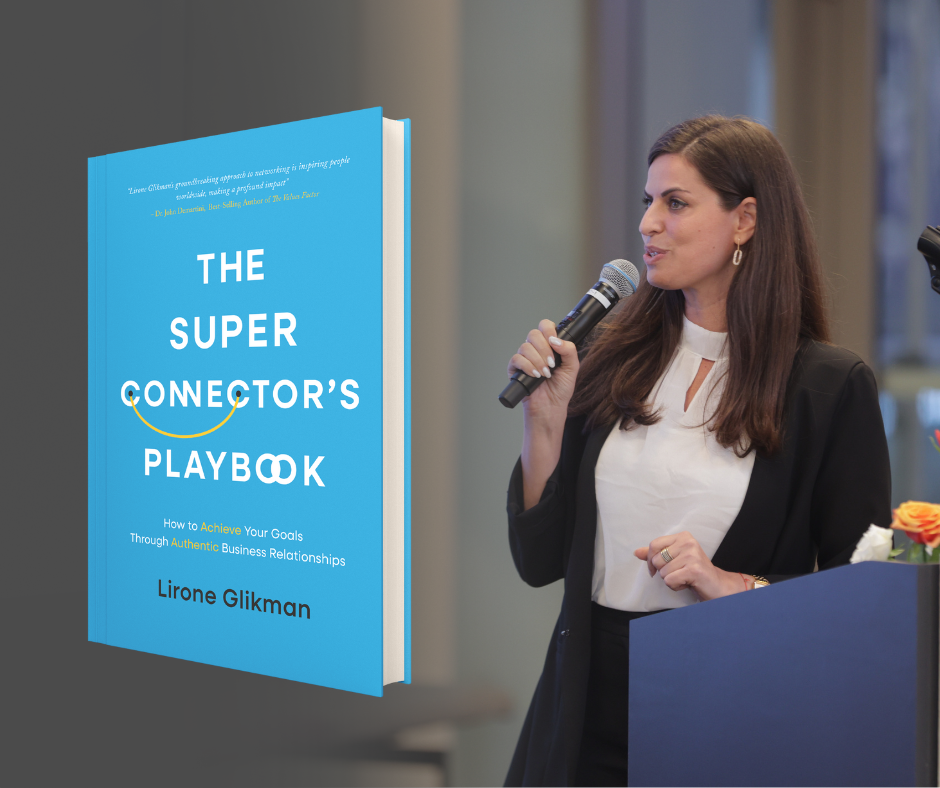
This week on the From a Woman to a Leader podcast, I sat down with Lirone Glikman, a global keynote speaker, personal branding expert, and bestselling author of The Super Connector’s Playbook. She has built relationships across 28 countries and just came off a five-city US book tour she largely built herself.
But that’s not really what we talked about. We talked about the thing most branding advice skips: how to become visible when you are shy, introverted, and convinced that everyone else finds this easier than you do.
Below are the insights from our conversation, with my own experience and concrete steps you can take this week.
1. Stop Hiding the Thing That Makes You Different
Lirone met dozens of founders on her US trip, and one lesson kept recurring: the people who stand out are those who lead with what makes them different rather than hiding it. She told me about Romy, an Israeli founder who opens her keynotes by naming her accent before anyone else can.
“She started with saying, hi, my name is Romy, I’m a founder of Sensei AI and I’m an Israeli and this is where my weird accent comes from. So she kind of embraced that, and it made her more likeable. It’s kind of diffusing the objections before they even rise.”
Here’s what I see again and again. Women spend enormous energy trying to sand down the very things that make them memorable, the accent, the unusual background, the non-linear career. The thing you’re apologizing for is often the thing people remember you by.
How to apply this: Write down the one thing about yourself you usually downplay in professional settings. This week, name it out loud once, lightly and without apology, the way Romy does. You’ll feel the objection deflate before it’s even raised.
2. Your Energy Matters More Than Your Polish
When Lirone moved to Australia at 21, she walked into a radio station with broken English and walked out with her own show. The manager’s reason has stayed with her for decades.
“He told me after interviewing me, you know something, your English sucks, but I like your energy and I’m going to give you a show.”
She didn’t get the show because she was polished. She got it because of what she brought into the room. As she put it later in our conversation:
“If you bring your vibe, your energy, people would not care about your accent. They would care about who you are and how you make them feel through the conversation.”
This is where so many quiet, capable women get stuck. They wait until they feel polished enough, fluent enough, senior enough. But people don’t connect with polish. They connect with presence. Your energy is doing more work than your perfect sentences ever will.
How to apply this: Before your next meeting, talk, or post, stop preparing what you’ll say and decide how you want people to feel. Bring that, even if the words aren’t perfect.
3. A Brand Is a Promise You Repeat
When I asked Lirone how someone with no confidence even begins to build a brand, she made it refreshingly concrete. A brand isn’t a logo or a viral post. It’s the consistent promise people come to associate with you.
“A brand basically is the promise that you give to the world, and it’s shown in every touch point. It’s about the goal, message, strengths, values, and feeling.”
She walked me through it with famous names, Taylor Swift, Elon Musk, Coca-Cola, each one reducible to two or three messages we hear about them over and over. Your brand works the same way. It’s not what you say once. It’s what you repeat.
How to apply this: Pick the two or three messages you want people to associate with you. Write them down. Then look at your last ten LinkedIn posts and ask whether they actually repeat those messages, or whether you’ve been posting at random.
4. Use AI Without Losing Your Voice
We both use AI tools every day, and we agreed on the same red line: the moment your content stops sounding like you, it stops working. Lirone’s rule is to use the tools without letting them flatten her.
“Even if you use ChatGPT, use it to an extent where it still keeps your vibe. When it’s too perfect, it’s not you, it’s the chat.”
The way I do this is simple. I record myself talking through an idea, then I ask the AI to use my words and just make them more readable. Not to rewrite me in fancy vocabulary I’d never actually use, especially because English is my second language, but to keep my voice and clean it up.
How to apply this: Next time you draft a post with AI, feed it your own recorded voice note or past posts first, then tell it to write in your words. Read the result out loud. If a sentence isn’t something you’d actually say, cut it.
5. You Are Your Own Unfair Advantage
The most common objection to building a brand is time. I’m too busy running the company, doing the job, raising the kids. Lirone pushed back on that hard, and I loved it.
“We as human beings are the unfair advantage of ourselves. We have to be out there. If we have a mission, if we want to make a difference with our product, we have no privilege not to build our brand.”
Then she made it doable. You don’t need video if you hate video. You can write, use animation, or use an avatar. And you can start small: set up a project in a tool like Claude or ChatGPT, feed it your past posts and a few LinkedIn guidelines, and spend one hour a week drafting one or two posts. That’s it.
This is the part that matters for every woman in a room that overlooks her. Being invisible isn’t humble. If you have something worth building, staying quiet about it isn’t modesty, it’s a cost.
How to apply this: Block one hour this week. Not to “build your brand,” just to write one post about something you actually know. Start there.
6. The Networking Move for People Who Hate Networking
In-person events are where confidence usually collapses, and Lirone has a model for it. She uses Dr. Ivan Misner’s VCP framework: Visibility, Connectivity, Profitability. Her research-backed observation is that women tend to be wonderful at the first two and freeze on the third.
“Women are good at starting the relationship, nourishing it, keeping in touch, but they rarely ask.”
Then she gave me the single most stealable tip in the episode, the Q&A hack. At a TechStars event in Germany where she knew no one, she raised her hand and introduced herself inside her question: “Hi, my name is Lirone, I’m a TechStars mentor, I specialize in personal branding, and my question is…”
“About four to five founders approached me after. So essentially, by introducing myself, I gave the audience permission to approach me.”
Sound familiar? You go to the event, do the hard part of showing up, then leave without meeting anyone because you waited to be approached. The shift is small: make yourself findable, and let people come to you.
How to apply this: At your next event, find one moment to say your name and what you do out loud to a small group, in a Q&A, at a table, in a queue. Then let the conversations come to you.
7. Nurture People Before You Need Anything
The reason most networking feels gross is that we only reach out when we want something. Lirone’s antidote is a system she swears by, the 90-list, from marketer Michael Port.
“Create a list of up to 90 people that are relevant for you right now. Every day you put five minutes in your calendar to reach out to one person in the list, and then follow up every month.”
The point is to build the relationship before you ever make an ask. A New Year note in January. A useful article in February. A comment on their post in March. By the time you actually need to ask for something in April, you’re not a stranger with a favor, you’re someone who has been showing up all along.
How to apply this: Start a list of 15 to 20 people who matter for your next six months. Put five minutes on your calendar tomorrow and send one of them something genuinely useful, with no ask attached.
About Lirone Glikman
Lirone Glikman is a global keynote speaker, personal branding and business-relationships expert, and bestselling author of The Super Connector’s Playbook. She founded The Human Factor, has worked with Fortune 500 companies, governments, universities, and startups across 28 countries, and serves as an executive director on the United Nations NGO Committee on Sustainable Development. Her work helps founders and executives build credibility through US tier-1 media, podcasts, and LinkedIn.
Connect with Lirone on LinkedIn and find her book and workbook at lironeglikman.com/tscp-book.
Resources mentioned during this episode:
VCP by Ivan Meisner – https://ivanmisner.com/what-is-the-vcp-process/
90 list by Michael Port – https://www.heroicpublicspeaking.com/articles/networking-relationships-that-lead-to-gigs
What I Took From This Conversation
The thread running through everything Lirone said is that visibility was never about volume. The loudest person in the room isn’t winning. The clearest one is. You don’t have to become an extrovert, lose your accent, or wait until you feel ready. You have to recognize what you genuinely bring and stop apologizing for the rest.
That landed with me personally because I spent years believing my quiet, introverted, second-language self was a problem to fix. I go deeper on my own take in this week’s solo episode, where I share the story of the conference that terrified me and what finally changed how I saw myself.
You Don’t Have to Figure This Out Alone
If you’re a quiet leader who’s been told you need to be louder to be taken seriously, you don’t. You need to get clear on what you actually bring and learn to lead with it. That’s the work I do every day with women in tech leadership: not turning you into someone else, but helping you become visible as yourself. If you’re sitting on a move you keep not making, let’s talk it through. Book a promotion strategy call, and we’ll figure out your next move together.
Where to Start This Week
Name the thing you hide. Pick the one trait you downplay professionally and say it once, lightly, without apology.
Write one post in your own voice. Block an hour, draft one thing you actually know, and cut any sentence you wouldn’t say out loud.
Send one no-ask message. Choose one person who matters for your next six months and send them something useful, with nothing attached.
Frequently Asked Questions
How do you build a personal brand when you’re shy or introverted? Start by identifying the two or three messages you want to be known for, then share them consistently in the format that suits you, whether that’s writing, audio, or short video. You don’t need to be loud or extroverted; you need to be clear and repeat your message. Lirone Glikman defines a brand as the promise you give to the world, shown at every touchpoint, which means consistency matters far more than charisma.
How can I network at a conference if I’m an introvert? Make yourself findable instead of forcing yourself to approach strangers cold. Lirone’s Q&A hack is to introduce yourself inside a question during a session, so people come to you afterward. You can also use situational openers in queues or near the entrance, and walk in with a goal of meeting just two or three specific people rather than working the whole room.
What is the VCP networking model? VCP stands for Visibility, Connectivity, and Profitability, a framework from Dr. Ivan Misner, founder of BNI. Visibility is meeting someone, connectivity is building the relationship, and profitability is when it produces results, referrals, or business. Lirone notes that women often excel at visibility and connectivity but hesitate at the asking stage.
How do you use AI to write content without sounding fake? Feed the tool your own words first, then ask it to keep your voice rather than rewrite you. Lirone’s rule is to use AI only to the extent that it still keeps your vibe, because content that’s too perfect stops sounding like you. Recording a voice note and asking the AI to tidy your actual words, not replace them, keeps your authenticity intact.
What is the 90-list networking method? The 90-list, from marketer Michael Port, is a list of up to 90 people who matter to your current goals, whom you nurture with small, regular touches before you ever ask for anything. You spend about five minutes a day reaching out to one person and follow up roughly monthly. The goal is to build genuine relationships so that when you do make an ask, you’re already a familiar, helpful presence.
How do I handle having an accent or speaking English as a second language at work? Lead with it instead of hiding it, the way Lirone’s example founder opens talks by naming her accent before the audience can. Embracing it diffuses the objection before it rises and often makes you more likeable and memorable. People respond to your energy and how you make them feel far more than to perfect pronunciation.
Who is Lirone Glikman? Lirone Glikman is a global keynote speaker, personal branding expert, and bestselling author of The Super Connector’s Playbook. She founded The Human Factor, has worked across 28 countries with Fortune 500 companies, governments, and startups, and serves on the United Nations NGO Committee on Sustainable Development.
What is The Super Connector’s Playbook about? It’s Lirone Glikman’s practical guide to building authentic business relationships and personal branding for growth. The book is designed to be digestible and actionable, covering networking, brand-building, and relationship-nurturing systems like the 90-list, and comes with a companion workbook available through her website.
🎧 Listen to my conversation with Lirone: How to Build a Brand When You’re Shy and Introverted
🎧 Listen to my solo episode this week: Your English Sucks, But I Like Your Energy
📺 Watch on YouTube:
📝 Read the deeper, more personal version on Substack