You have something you have been meaning to put in front of someone.
Maybe it is a proposal, or a promotion conversation, or an idea you have been quietly building on the side. And every week you decide it is not quite the right moment yet, because it still needs one more thing. One more result. One more certification. One more quarter of proof so nobody can push back on you.
So you keep getting ready. And the thing about getting ready is that it feels productive, right up until you notice that someone with half your preparation already asked, and already got a yes.
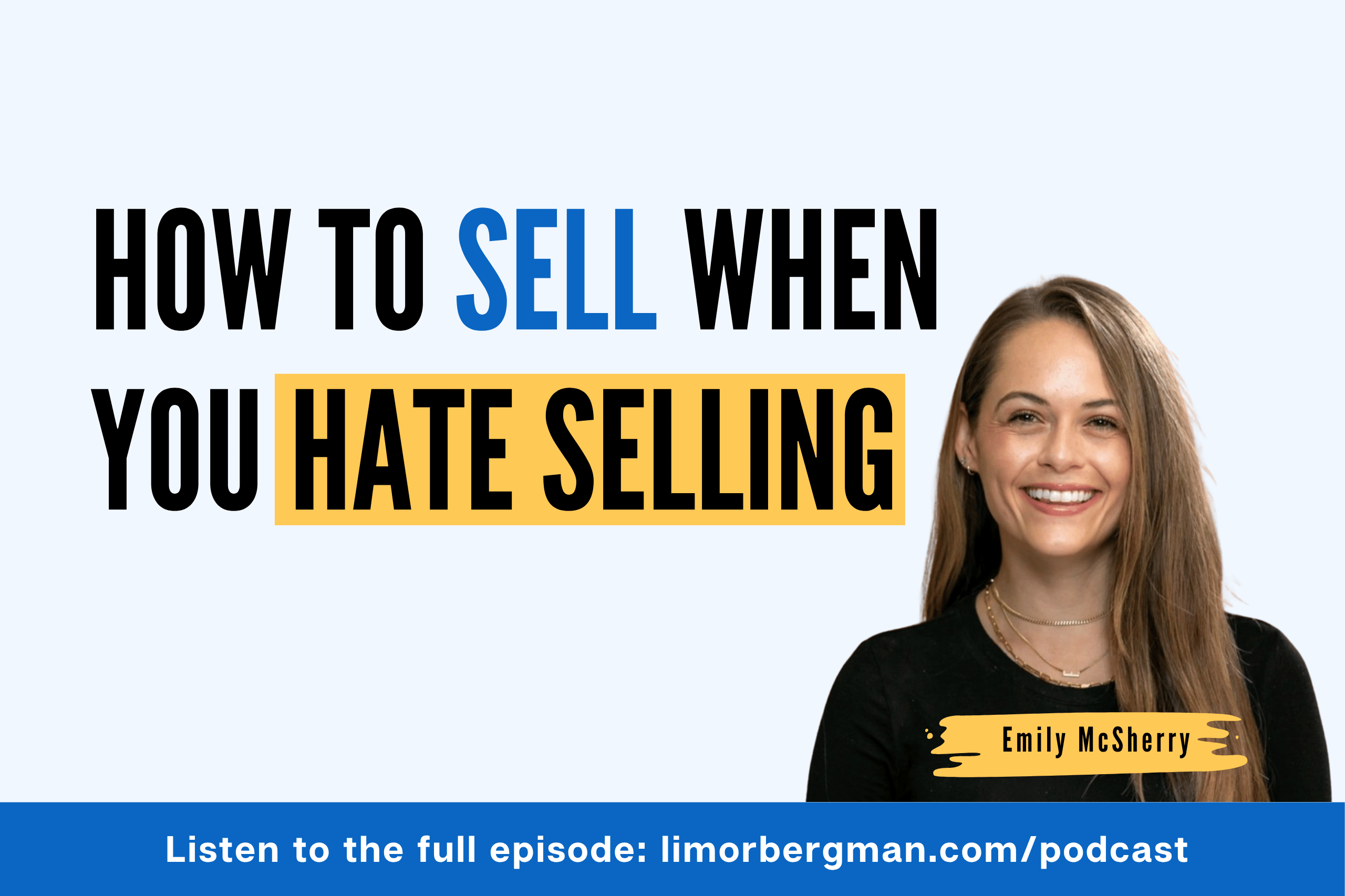
This week on the From a Woman to a Leader podcast, I sat down with Emily McSherry, founder and CEO of Advize, a platform that helps students learn about careers by watching short video interviews with people who actually do the job. Emily grew up in a small rural Texas town where she had almost no exposure to professional careers, did everything right in college, and still walked out feeling completely lost. She then spent close to a decade in recruitment in Los Angeles, where her job was teaching recruiters how to cold-call for a living.
But that is not really what we talked about.
We talked about the part almost everyone skips: what you do when you have no proof, no track record, and no polished thing to show, and you have to ask anyway.
Below are the insights from our conversation, with my own experience and concrete steps you can take this week.
1. An Idea Is Just an Idea Until Somebody Tests It
Emily had a lot of ideas. That was never her problem. Her problem was that she was treating having the idea as though it were the work. Then someone in business school said something to her that she still repeats years later.
“Someone told me an idea is just an idea, right? And I was kind of like, that kind of hurts, because I have so many ideas. I feel like I’m such a creative person. I was like, OK, I really need to figure out how to do something about my idea.”
I hear a version of this constantly, and not just from women who want to start a company. I hear it from women in engineering who have been carrying an idea for how their team should work for two years without ever writing it down. The idea feels like progress because you keep thinking about it. It is not progress. It is just an idea, and it stays an idea until it meets a person who is not you.
How to apply this: Take the idea you have been carrying and give it a deadline this week. Not a launch date, a conversation date. Put one meeting in the calendar with one person who is not obligated to be nice to you, and tell them the idea out loud.
2. Find Your Biggest Assumption and Try to Break It
Before Emily built anything, she wrote down what had to be true for her business to work. Then she went and checked, cheaply, whether those things were actually true.
“Before you build a prototype, you need to understand what your biggest assumptions are.”
Two assumptions mattered most. The first was that people would sit for a video interview for free. She surveyed 10 to 30 people and asked them directly. The second was bigger.
“Another big assumption of ours, which was actually more important than that, was that students have the problem. Because entrepreneurship is all about problems and solutions. So if the students didn’t see this as a problem, then there’s no reason to build a solution for it.”
She ran focus groups with 200 to 300 students before writing a line of code.
Here’s what I see again and again. Women in tech are excellent at this kind of rigor when it is someone else’s project, and they are the reviewer. When it is their own idea, they skip straight from “I think this is a good idea” to “I need to build the whole thing perfectly before anyone sees it.” The rigor you would apply to a design doc at work is exactly the rigor that would save you six months on your own thing.
How to apply this: Write down the single belief that, if it turned out to be false, would make your whole plan collapse. Then design the cheapest possible way to find out if it is true. A survey, five conversations, one email. Do that before you build anything.
3. Sell It Before It’s Fancy
This is the line from the episode I keep coming back to. Emily built her prototype for under a thousand dollars and sold it to five universities before it had any of the things that make it look impressive today.
“I was able to build our prototype for less than a thousand dollars and sell it to five universities for our MVP, or our minimum viable product. Like that was my big idea, was test assumptions, build the prototype, get someone to buy it before it’s fancy. And before I ask anyone for money.”
I asked her what she actually handed those first universities, because I wanted to know how rough “rough” really was.
“It had all the content and it had a login and students could just go in there and watch, but it didn’t have a fancy analytics dashboard. It didn’t have AI recommending content. It didn’t have our tool to let educators create an assignment and send it to students.”
And then this, which is the part I want you to sit with:
“But it didn’t look as elevated as it does now. And that’s okay.”
That sentence is the whole episode. Not “it was secretly great.” Not “they didn’t notice.” It was rougher than she wanted, they knew it was rougher than she wanted, and it was still enough.
This is where women get stuck. We hold ourselves to a standard of finished that nobody else in the room is holding us to, and we call it having high standards. Often it is just fear wearing a respectable outfit.
How to apply this: Name the version of your thing that is 60 percent done and would still be genuinely useful to someone. Then show that version to one person this week instead of waiting for the 95 percent version you have been promising yourself since spring.
4. Your First Yes Comes From Someone Who Already Wants You to Win
I asked Emily how a young woman with a barely built product convinces a university to buy. Her answer was less mysterious than I expected, and much more usable.
“Friends, family, anyone you have a relationship or some sort of connection to, and that’s what I did. So for me, that meant my alma maters, like where I went to school.”
Both of her schools said yes in some form. One became a real partner. And then the momentum did the rest.
“That’s how I got maybe the first one, and then I could go to other schools and say, hey, I have this school on board, and that helps get the momentum going. Because they want you to succeed.”
She also did not hand everyone the same deal. She built each one around what that particular buyer actually cared about. One university wanted alumni content far more than they wanted the technology, so she priced the content and told them what it would cost to do it themselves.
“So almost giving them like no reason to say no.”
Sound familiar in a different form? This is exactly how internal visibility works. Your first sponsor is almost never the skip level you have never spoken to. It is the person two desks over who already thinks well of you and would genuinely like to see you get the thing. Start there, then use that as evidence when you go to the harder room.
How to apply this: Write down three people who already want you to succeed and who are close enough to the thing you want that their yes would matter. Ask one of them this week. Not for a favor, for a real conversation about the real thing.
5. Stop Explaining, Start Asking
Emily’s background is sales training, and her explanation of what most people do wrong is the clearest version of it I have heard. She uses a shoe store.
“Someone comes up to you and says, hey, I have this pair of Nike sneakers, they’re lime green, they’re size 10, you gotta try them on. You just walk into the store. Versus, hey, how’s it going? What are you looking for today? And then you’re like, I’m actually buying shoes for my kid. She really loves soccer. And her favorite color’s blue. Then they’re gonna be able to not offer you any shoe in the store, but the shoe that you want.”
“So sales is all about that no matter what it is. It’s based on problem solution and asking these questions and matching back the solution to what they want.”
Here is why this matters to you even if you never sell anything in your life. Most women I coach do not lose the room by being unprepared. They lose it by over-explaining. You walk into the promotion conversation with a document of everything you have done, and you present all of it, because you are worried that if you leave something out they will think you did not do enough.
But your manager is not evaluating volume. She has one or two things she actually cares about this quarter. If you ask her what those are before you start talking, you get to spend the whole conversation on the part that moves her. That is not manipulation. That is the difference between the lime green size 10 and the blue soccer shoes.
How to apply this: In your next conversation where you want something, ask two questions before you make a single statement about yourself. Write the two questions down beforehand so you do not lose your nerve and start presenting.
6. How to Sell When You Hate Selling Is Mostly a Mindset Problem
Emily did 500 cold calls a week in her first job, for several years. She is not romantic about it.
“I think cold calling is scary, right? And even in my first job, I had to do 500 cold calls a week and I did that for several years, okay? It’s terrible. But you can get really good at it. And I would say honestly, 80% is your mindset and getting into the right state of mind.”
“You have to get in the right mindset, otherwise your tone, what you say, your confidence and everything will lose you the shot before you even get on the phone.”
The practical part she added is the bit people skip: write down what you are going to say, and say it out loud before you say it to the person who matters.
I want to be careful here, because “it’s all mindset” can become a way of telling women that their perfectly reasonable discomfort is a personal failing. That is not what Emily is saying. She is saying the thing gets easier with reps, and the state you are in when you walk in changes the outcome. Both are true, and both are trainable. Neither of them means the fear is your fault.
How to apply this: Write your opening two sentences word for word before your next ask, and say them out loud three times. Not to memorize them. To hear what you sound like, so the first time you hear your own voice saying it is not in the actual conversation.
7. Two People Can Walk Into the Same Conversation
At the end I asked Emily if there was anything I had not asked about. What came out was the strongest moment in the episode, and it is about fear.
“You have a lot of fear, especially at the beginning with a brand new idea, going to brand new people, and you don’t have no proof that something’s going to work. There’s two people that can show up to that conversation.”
“One is the scared entrepreneur who’s very hopeful that someone will try this thing, or one is acting like you already sold your company for millions of dollars and you know it’s gonna work and you have a really compelling story. And you have to get into the mindset of being this second person before you go to have these conversations.”
“You really have to get into that future state in order to be that person that someone will buy from. Otherwise, your fear might take over and it might be what’s blocking you from actually being successful in this way.”
And then the part that makes it real rather than aspirational:
“Since I did that, things have been happening and leveling up. Now I actually have the client base and I actually have paying customers and I actually have the data, which makes you even more confident.”
Notice the order. She did not wait for the client base to feel confident. She acted like it first, got the clients, and the confidence followed. Most of us are running that sequence backwards and then wondering why we never arrive.
How to apply this: Before your next meeting where you want something, take two minutes and write down how the version of you who already got this would sit, speak, and open. Then go in as her. It sounds small. Emily would tell you it is close to everything.
About Emily McSherry
Emily McSherry is the founder and CEO of Advize, a platform that helps students explore careers through short video interviews with people actually doing the work. She grew up in a rural Texas town surrounded by hardworking people but with very little exposure to professional careers, which left her with no real sense of what was possible. She did all the right things in college, the internships, the double major, the full tuition scholarship, and still left feeling lost.
She then spent roughly seven to ten years in recruitment in Los Angeles, where her job was training recruiters to become fast experts in industries they knew nothing about, purely by interviewing people. That is where she saw how quickly someone learns when they simply ask good questions, and it became the foundation for Advize. The platform now holds more than 12,000 video interviews from over a thousand professionals, and is used by university career centers to deliver career exploration as a measurable class assignment.
Connect with Emily:
LinkedIn: https://www.linkedin.com/in/msemilymcsherry/
Advize: https://advizehub.com
Emily also runs a LinkedIn newsletter, linked from her profile.
What I Took From This Conversation
The thing I keep turning over is that Emily never described herself as fearless. She described fear as a constant, and then described a specific, repeatable thing she does about it.
That is the difference between advice that helps and advice that just makes you feel worse. “Be confident” is not usable. “Decide who is walking into the room before you walk into it, and write down how she would open” is usable at two o’clock this afternoon.
And underneath all of it is the same pattern I see in almost every woman I coach who feels stuck. She is not underqualified. She is over-prepared and under-asked. She has done the work and she is waiting for the work to speak for itself, and the work does not speak. You do.
You Don’t Have to Figure This Out Alone
If you are reading this and recognizing yourself, if you have been getting ready for months for a conversation you could have had in March, I want you to know that this is one of the most common things I work on with women in tech leadership, and it is very fixable.
You do not have to figure out on your own what to ask for, how to frame it, or who to ask first. That is exactly the kind of thing that gets much clearer with someone in your corner who has watched a hundred versions of it.
Book a promotion strategy call, and we’ll figure out your next move together.
Where to Start This Week
Pick the assumption that would break everything. Write down the one thing that has to be true for your plan to work, then find the cheapest way to check whether it actually is.
Show the 60 percent version to one person. Not the polished version you keep promising yourself. The one that exists right now and would still be useful to somebody.
Ask two questions before you make one statement. In your next conversation where you want something, find out what they care about before you tell them what you have done.
Frequently Asked Questions
How do you sell when you hate selling? Treat it as asking questions rather than making a pitch. Emily McSherry, who trained salespeople for a living, says selling is fundamentally about understanding someone’s problem and then matching your solution to what they actually said they wanted. If you dislike selling, you probably dislike the version where you talk at someone about your product. The version where you ask what they are dealing with and respond to that is a conversation, and most people who “hate selling” are perfectly good at conversations.
How do you get your first clients with no track record? Start with people who already have a relationship with you and would like to see you succeed. Emily’s first customers were her own undergraduate and business schools, and later clients came as referrals from those. She then used the first names as proof when approaching people who did not know her. The first yes is rarely from a stranger, and it does not need to be.
Do I need a finished product before I can sell it? No. Emily built her prototype for under a thousand dollars and sold it to five universities before it had an analytics dashboard, AI recommendations, or its assignment tool. What mattered was that it functionally worked and delivered enough value to be worth the reduced early partner price she offered. Her rule was to get someone to buy it before it’s fancy, and before raising any money.
What is a minimum viable product and how do I know what mine should be? A minimum viable product is the simplest version of your idea that still delivers real value to a customer, built to test whether people will actually pay rather than to impress anyone. Emily determined hers by interviewing lots of people and students about what they would want, then testing it with students before ever going to a university. Every MVP is different, so the question is not what is standard, it is what is the least you can build that still solves the problem.
How do you get over the fear of cold calling? Emily says roughly 80 percent of it is mindset and the state you are in before you dial, because your tone and confidence decide the outcome before you speak. The practical part is preparation: write out what you want to say at the start in case you get flustered, and practice it out loud before the call. She did 500 cold calls a week for several years and describes it as terrible but learnable.
Does cold email or LinkedIn work better than calling? Emily has had very little success from cold email, and her current best-performing channel is LinkedIn direct messaging. She has built up about 6,000 followers and posts consistently, so when she messages someone they can click her profile and immediately see that she is legitimate. She notes that sales typically takes seven touch points to get a yes or no, usually mixed across calls, emails, LinkedIn and texts.
How do you test a business idea before building it? Identify the assumptions that must be true for the idea to work, then find the cheapest way to check each one. Emily tested whether people would do video interviews for free by surveying 10 to 30 people directly, and tested whether students actually experienced the problem by running focus groups with 200 to 300 students plus surveys. Only after both held up did she build anything.
Who is Emily McSherry? Emily McSherry is the founder and CEO of Advize, a platform that helps students learn about careers through short video interviews with people doing those jobs. She grew up in rural Texas, spent about seven to ten years in recruitment in Los Angeles training recruiters how to headhunt, and launched Advize out of a business school capstone project. The platform now holds over 12,000 video interviews from more than a thousand professionals.
🎧 Listen to my conversation with Emily McSherry: How to Sell When You Hate Selling
📺 Watch on YouTube: https://youtu.be/rGXOusLK6ro
📝 Read the deeper, more personal version on Substack
Full Transcript
Full transcript of my conversation with Emily McSherry on the From a Woman to a Leader podcast. Lightly edited for readability, filler words and false starts removed, wording otherwise unchanged.
Two people can show up to the same conversation
Emily McSherry (00:00): There’s two people that can show up to that conversation. One is the scared entrepreneur who’s very hopeful that someone will try this thing, or one is acting like you already sold your company for millions of dollars and you know it’s gonna work and you have a really compelling story. And you have to get into the mindset of being this second person before you go to have these conversations.
Limor Bergman Gross (00:24): Hi everyone and welcome to another episode of From a Woman to a Leader. I’m your host, Limor Bergman Gross, and today I’m excited to interview Emily McSherry. Emily is the founder and CEO of Advize. Advize is a platform that helps students learn about careers from people actually doing the job. And Emily started in sales. She used to sell a bare bones product to her first five universities before it was anywhere near ready. And we talk about testing your idea before you build it, asking questions instead of pitching, and why she says 80% of selling is mindset. So this is not just for the salespeople out there, but for everyone. If any of you have ever waited until something felt polished before you put it in front of anyone, stay tuned and let’s dive right in.
What Advize does and the problem it solves for students
Limor Bergman Gross (01:32): Tell us a little bit about your company, about Advize.
Emily McSherry (01:36): Yes, so I’m the founder and CEO of Advize. It is a platform helping students learn about careers through short form video interview content. The more students watch, the smarter it gets and makes recommendations. And the content is composed of short clips. It’s like if I asked you, what do you do every day, or what do you like about your job? And so it helps students actually hear from someone who’s actually in the job besides maybe their parents or teachers, and helps them come to really awesome conclusions like lowered anxiety, more confidence, and also just building their general knowledge about things they might not know or didn’t know exist as well.
Limor Bergman Gross (02:20): So basically bridging the theory that they get from school to how does it look like in practice, on the job.
Emily McSherry (02:29): Yes, one of the most common ways we’re implemented is at universities where let’s say a professor or a career coach of a large class has, you know, they could have 20 students or thousands of students, and it’s really hard for that one person to give customized career advice to all of those students. So it provides customized career education and learning for students, but it also provides the reporting and customization for the educator on the back side.
Limor Bergman Gross (03:00): Okay, that’s wonderful. Seems like very much needed.
Emily McSherry (03:05): Yes, that’s what people tell me, so.
Limor Bergman Gross (03:08): Yeah, right, you don’t know what you want to do. To be honest, many people don’t know what they want to do even later in their careers, but definitely when you’re a student, you have no clue.
Emily McSherry (03:19): Yeah, and also when you’re older, I’ve had older people who are interviewing for the site tell me, actually, I kind of need this now because I’m looking to pivot. I would say the difference is that you or I, right now, if we wanted to do something new, we would have a lot more confidence and contacts and skills to go find and talk to people who might be doing that career. A student hypothetically could, but it’s a lot harder for them. And there’s so many things, they are studying so broad. So the content’s relevant for people who are older too, but it’s a much bigger problem for younger people who don’t have the networks and they don’t have the skill. And they really need to narrow it down.
Growing up not knowing what was possible
Limor Bergman Gross (04:00): And Emily, what led you to start Advize?
Emily McSherry (04:04): Yeah, going back to your point of it sounds like it’s needed. It’s something that I needed first and foremost. I grew up in a very rural Texas town when I was younger. So I had a lot of hardworking people around me, but not a lot of professional, you know, I would say professional careers or big companies or anything like that. So I just felt very limited about what was possible and I just had no idea. And then I went to college, I kind of did all the right stuff, did the internships, I got a free tuition scholarship to college, I had a double major, you name it, but I still left college feeling very lost and confused about what I could do with a management degree with no real job experience, right, besides some internships.
The recruiting job that showed her how people actually learn about careers
Emily McSherry (05:00): And then I spent about seven to 10 years in Los Angeles working in the recruitment industry where I kind of had this light moment go off, because it was my job to train recruiters how to headhunt and how to get people jobs. So I could take someone that had no idea about financial services and I would make them a financial services expert, because you have to be in order to identify good talent and find them jobs in the industry. And I did that by having them interview people all day every day and just asking people basic questions like walk me through your background. Walk me through what you do every day. And I just saw how big of an impact it has on learning.
Emily McSherry (05:34): And even for me, I felt like I had all this wealth of knowledge that I just felt like I needed a lot earlier. And I know students need a lot earlier because they’re making these crazy, expensive, critical decisions with limited information, and they’re also nervous and terrified. And so in business school, when we had an opportunity to launch an idea for our capstone, I had this idea of like, how do we connect all this knowledge from the real workforce with students? We thought about doing it live, realized it’s really hard to scale that live. And then we thought, well, why don’t we just capture the best practice coffee chat questions in an interview format, but put it on video.
Emily McSherry (06:22): So now on our platform, we’ve interviewed over a thousand people and we have over 12,000 videos, right? And so a student can pick from any of those, and that’s a way more scalable than trying to meet someone one-on-one or having an alumni just come into one class.
“An idea is just an idea”
Limor Bergman Gross (06:38): Wonderful. And how did you get from idea of this is needed to actual company? I mean, in short, obviously, I mean, but how did you go about like raising money, pitching that idea? Like what was the process that you went through?
Emily McSherry (06:56): Yeah, and I think this is where a lot of people get stuck, right? And I think one thing that kind of stuck with me in business school, someone told me an idea is just an idea, right? And I was kind of like, that kind of hurts, because I have so many ideas. I feel like I’m such a creative person. I was like, OK, I really need to figure out how to do something about my idea, right?
Emily McSherry (07:20): And so that was one benefit of having this capstone thesis at school, because we essentially got a year and a half to experiment and learn how to really build out a business model and how to test ideas, and that was really helpful. So I kind of break down a couple of the key things that are, I would say, very well known in entrepreneurship, but it was the first time I was formally introduced to it, I would say.
Emily McSherry (07:43): The first idea is this concept of Lean Startup Method. There’s a book that’s been around for a while about this. But it’s all about, okay, we need to get out something that’s cheap and somewhat functional and get it in front of people who we assume will be our customers and get their feedback on this idea. A lot of people, for whatever reason, when they have an idea, they believe, I need to go out and raise all this money to build this thing to see if it might work. And I think that’s very, very risky. And I would not recommend that.
How to test your biggest assumptions before you build anything
Emily McSherry (08:19): I would think about what is the cheapest prototype I can build of my idea, and it could even be in the format of a survey or something else. And I would get the evidence back from my target audience to see if that is legitimate. So I’ll kind of break it down specifically for Advize, right? So you have to, before you build a prototype, you need to understand what your biggest assumptions are.
Emily McSherry (08:42): So some of the biggest assumptions that we were able to test before we built anything were, people are willing to interview. I’m giving a thumbs up. That was one of our biggest assumptions, is people are gonna be okay interviewing for free and getting their videos up on the platform. Because if that wasn’t true, then none of this would work. So in order to test that assumption, we went out and we surveyed 10 to 30 people and we just asked them, hey, if I were to ask you to spend 30 minutes online and get asked these questions, would you do it, and would you expect compensation? And then the majority, if not 100%, said, I would do that, right, for various reasons. So we were able to kind of cross that off.
Emily McSherry (09:26): Well, what’s the next assumption? Another big assumption of ours, which was actually more important than that, was that students have the problem. Right? Because entrepreneurship is all about problems and solutions. So if the students didn’t see this as a problem, then there’s no reason to build a solution for it. Right? So we did focus groups with, I think, upwards of 200, 300 students, as well as a mix of surveys to get responses about, is this something, are students worried about their career every day? How do they feel about this? What are their problems and how are they feeling and how big is this problem? Is it big enough to build something around it, right?
Emily McSherry (09:53): So whatever idea you might have, that’s great. And maybe you have that problem, but you really need to think about conceptually who else has this problem and figure out a way to really test your assumptions and get the data in order to move toward a prototype and actually start investing some money.
Building a prototype for under a thousand dollars and selling it
Emily McSherry (10:29): I would say the last thing that I was able to do with our startup, that some companies can’t do, but today there’s so many tools out there to build technology and things like that that used to cost a lot of money. I was able to build our prototype for less than a thousand dollars and sell it to five universities for our MVP, or our minimum viable product. Like that was my big idea, was test assumptions, build the prototype, get someone to buy it before it’s fancy. And before I ask anyone for money. And I think that process can be applied to almost any idea or startup that someone might have. And that’s what I did.
Limor Bergman Gross (11:08): That’s a lot of wisdom here. So basically not falling in love with the idea. Test first of all if it’s viable, right? You went and talked to hundreds of students, surveys and all that, checked even the validity, checked the assumptions about interviewing people for free. Build a quick, cheap prototype that will be viable enough to sell, and sold it.
What she actually handed the first universities
Limor Bergman Gross (11:31): So did you sell something that was not ready yet? Tell us a little bit about this. So when you sold it to the university, what did you sell them?
Emily McSherry (11:46): Yeah, so when I sold it to them, it was a very basic working prototype of our website today. So it had all the content and it had a login and students could just go in there and watch, but it didn’t have a fancy analytics dashboard. It didn’t have AI recommending content. It didn’t have our tool to let educators create an assignment and send it to students. So at a very basic level, everything functionally worked.
Emily McSherry (12:18): But it didn’t look as elevated as it does now. And that’s okay. They were getting enough value for what I was, I created special early partner agreements with them where it wasn’t the full price that it is now. So that’s another thing you can do, is you need to think about people who are gonna buy this and might be an early adopter, and how you can adjust things to where maybe they’re taking on a little bit more risk, but there’s maybe something else in it that interests them.
Emily McSherry (12:42): And getting over that hump is everything, because then you have logos, then you have data that shows that it works. And then you can take that data to the next phase of similar clients. Or, you know, if you do want to raise money, you can say, well, we don’t just have this idea. We have this thing. These people are using it. And here are the outcomes from it. So that whole process is super, super important. And yeah, every MVP or minimum viable product is different for every company. So luckily with ours we were able to figure out a way to do it that was very low cost.
Limor Bergman Gross (13:25): Yeah, and how do you know what is the minimum viable product?
Emily McSherry (13:29): We interviewed a lot of people and students about what they would want, and we also tested it with students before going to the university.
Where your first customers actually come from
Limor Bergman Gross (13:38): Okay. And tell us a little bit about the process of how do you, as a young woman, you go to university, you want to sell them something that exists in a very, very kind of bare minimal form. How was the process? How were you able to convince them?
Emily McSherry (13:56): Yes, great question. So I would say several things, right? I used to be a sales trainer, right? I started out my career in sales. And if you were to sell anybody anything or get someone to try something, like who are the people that you would go to first?
Limor Bergman Gross (14:14): Friends and family, probably.
Emily McSherry (14:17): Friends, family, anyone you have a relationship or some sort of connection to, and that’s what I did. So for me, that meant my alma maters, like where I went to school. So I had my undergraduate school, I had my business school, and both of them were willing to try it, right? Or one was willing to try it, one was willing to really be a formal partner. Then I identified, you know, the other clients kind of came off of those actually.
Limor Bergman Gross (14:45): As a referral.
Emily McSherry (14:49): As a referral for some of them, not all of them. But that’s how I got maybe the first one, you would say, and then I could go to other schools and say, hey, I have this school on board, and that helps get the momentum going. Because they want you to succeed. They want to see you succeed too, right? Like whether it’s a family member, a friend, or a school or someone that you know. So that’s kind of what I did first.
Building a deal around what the buyer actually cares about
Emily McSherry (15:10): The second thing was that, again, I put together and really thought through what would be a win-win proposal for them, right? And that’s different for every single partnership, but I knew cost would be a factor. I knew the people I was going to would want me to succeed. And I also knew, depending on what questions I would ask them that they’re facing problems with, I would focus on their problems and essentially customize a deal based on what they were having difficulty with or saw the most value in.
Emily McSherry (15:40): So it might sound broad, but for example, I had one of our first universities who really, really, really wanted alumni content. They really wanted their own content, and they were even more interested in that than the actual technology itself, which, you know, I wasn’t thrilled about, but I needed some more clients and I knew I could get them to use the technology eventually. So I structured their entire deal around, hey, we’re gonna do this content for you and it’s gonna cost this much. If you went out and did it yourself, it would be five times as much. So almost giving them like no reason to say no.
Stop explaining, start asking: the shoe store
Emily McSherry (16:22): Yeah, and really focusing on what their problems are through open-ended questions, right? At the beginning of a sales call, I think it’s really important to just get a lay of the land, ask questions. Because here’s an example of a bad sales scenario, right? Maybe you’re going to buy a pair of shoes. And so there’s a difference here, right?
Emily McSherry (16:50): Someone comes up to you and says, hey, I have this pair of Nike sneakers, they’re lime green, they’re size 10, you gotta try them on. You just walk into the store. Versus, hey, how’s it going? What are you looking for today? And then you’re like, I’m actually buying shoes for my kid. She really loves soccer. And her favorite color’s blue. Then they’re gonna be able to not offer you any shoe in the store, but the shoe that you want.
Emily McSherry (17:17): So sales is all about that no matter what it is. It’s based on problem solution and asking these questions and matching back the solution to what they want.
Emily McSherry (17:27): So for example, if I was saying, I don’t know what your, you know, what’s your price range? And she gives me her price range. And I’m the shoe salesman, I would say, great, well, I have this really awesome shoe, it’s in your price range, I know that’s important to you. It happens to be in two shades of blue, it’s Nike, and they’re flying off the shelves. Like, would that be something you wanna try on? It’ll help her run fast. I don’t know. You want to sell some sort of benefit after understanding what they care about. And I do that constantly, that type of selling in my business.
Limor Bergman Gross (17:58): So you share a lot of valuable wisdom here. I just want to recap. So basically you’re saying instead of start pitching your product or your solution, you approach it first from having a conversation and really interviewing the client first and asking them what are their challenges.
Finding the questions that actually work
Limor Bergman Gross (18:22): How do you frame that around? I mean, obviously if you come to a university, for example, right, in your case, they have a lot of problems. So how do you frame that still like as open-ended questions, as interview, but still focused around the solution that you have?
Emily McSherry (18:36): Yeah, and that’s been one of the hardest challenges about doing something new in a space that can be so broad, like you’re saying, because it took me a long time to figure out which questions are the right ones to ask. Because you’re right, if I just say, tell me about your problems, which is what I did at first, I hear a lot of things, I kind of pick up on a couple things. But then later on, as I demoed the product more and more and more, probably over 300 times in the last year, you start to notice patterns of what people gravitate toward, or what area of the university has the problem that we can solve.
Emily McSherry (19:14): Right? So I think that’s one of the hardest parts about entrepreneurship, is finding that market fit and figuring out which questions are going to lead you to the right conversation, because you don’t really know it until you have as many of those conversations as possible. So for example, one that I ask now is, can you walk me through any existing career programming, first year experiences or major career classes that you might have? Because based on that answer, I know if I can really sell our assignment tool that’s meant to be delivered in a class or not.
Emily McSherry (19:44): And it also gives me lay of the land of like what their year looks like and their resources and just kind of what’s going on. And unfortunately, every university is completely different. And that’s an assumption I did have that I learned the hard way, is, wow, this really has to be a custom thing for almost like every single university.
Emily McSherry (20:10): But yeah, reps and getting more data helps. And you kind of have to push through that uncomfortability and get the reps in. And I would also recommend recording all of your calls, of course. And now you can analyze it with AI to find these trends, find what’s sticking, find what questions are repeated. And then you can even build those questions that are repeated continuously into your pitch so you don’t keep getting the same questions. AI’s made this a lot more analytical and I would recommend doing that too.
Why she still tries to meet people in person
Limor Bergman Gross (20:41): And they are okay with that, with recording the meeting. So you usually do it online, like virtually.
Emily McSherry (20:48): Yep. Yeah, well, I try to meet in person if possible, but obviously I’d have to travel around and stuff like that.
Limor Bergman Gross (20:53): Yeah, you have to be on an airplane all the time.
Emily McSherry (20:57): Yeah, and for the first year, honestly, I was. I did in person as much as possible because I knew if I could get someone to sit down with me and I could buy them a coffee, I would have a much more meaningful relationship and they would see that I care a lot. And a lot of those deals that I closed, especially at the beginning, were in person.
Emily McSherry (21:21): So I would say, especially starting out, if you can get face to face with who’s in your area, that would be another example besides family and friends or your alma mater school that I would recommend, right? You use your local advantage, your local location to your advantage and say, hey, I have this thing. I’m a recent student or whoever. I’d love to get your thoughts and buy you coffee or lunch. It helps you get meetings. And then just that in person, you can’t really replace it. But for the rest of the time, yeah, virtual, it’s like an intro discovery call, then kind of like a group demo, and then moving into steps after that.
Limor Bergman Gross (21:57): Yeah, wonderful. So you first did the legwork and now you can allow yourself to do it virtually because you already have like a product, you have the client base and so forth.
Cold calling, and the 80 percent that is mindset
Limor Bergman Gross (22:08): And how do you, if you kind of reach out to a potential buyer, how do you influence them to speak with you if you don’t know them, right? If this is something relatively, if you do that, like cold pitching.
Emily McSherry (22:24): Yeah, well, it’s a couple things. I would say a lot of cold calling is, this might sound maybe silly, but I think cold calling is scary, right? And even in my first job, I had to do 500 cold calls a week and I did that for several years, okay? It’s terrible. But you can get really good at it. And I would say honestly, 80% is your mindset and getting into the right state of mind. You can say smile and dial, or really believe that you’re gonna get this meeting.
Emily McSherry (22:55): You have to get in the right mindset, otherwise your tone, what you say, your confidence and everything will lose you the shot before you even get on the phone. So that’s a really big thing, is kind of like pumping yourself up is one.
Emily McSherry (23:12): The other thing is, if you’ve never done it before, even if you have done it before, just write out what you want to say at the beginning in case you get flustered or anything like that, and practice it out loud before you actually go into the call. So definitely lots of reps and practice before you go in about your pitch.
Emily McSherry (23:25): And I would say there is something that’s really beneficial about being the CEO and calling people that I didn’t have in my other jobs. It was kind of crappy in the past, right? You’re like, I’m calling on behalf of my director or this company. Versus now I say, hey, this is Emily. I’m the CEO of Advize. How are you? It sounds important. They’re like, a CEO is calling me. Like, who is this? Right?
Emily McSherry (23:53): And then what I’ll do is I’ll kind of keep it quick. I’ll say, hey, we work with universities like blank, blank, blank, I saw you do this. I’m hoping to set up time like next week just to kind of walk you through this and get your thoughts. What does Thursday at two look like? So that’s just kind of a quick breakdown of what I do, but I definitely customize it. I love to name or logo drop. And I would say my ultimate goal is to get the meeting set. It’s not to explain everything on the cold call.
Emily McSherry (24:16): And it becomes a bit of an art, but it does still work. It just takes more volume to actually catch somebody. And it’s a lot of hard work, but I would say half of my first five clients or so, or at least two of them, came through that sort of cold outreach. So it did work.
Limor Bergman Gross (24:30): So you just call them, you actually call them on the phone, or you email? What works best?
Emily McSherry (24:36): Yeah, I don’t know if I’ve gotten anything over email, unfortunately. I know there’s some benefits of having what’s called like sequences or campaigns kind of automatically go out. In sales, it takes seven touch points to usually get someone to say yes or no to you. So that mix is usually between calls, emails, LinkedIn, texts. It can be like a combination of those things. And for better or for worse, the call still hits, because I don’t know if a lot of people are doing it still. And if you can talk to somebody, you can deal with objections and kind of explain things a little bit more.
Why LinkedIn outperforms cold email right now
Emily McSherry (25:13): One of my favorite strategies as of late though is I’ve been building up my LinkedIn presence for several years now. So I have about 6,000 followers and I’m always putting out content, and I’ve really made an effort to make my personal brand strong.
Emily McSherry (25:24): And that’s another reason why I love doing these podcasts, is not only for people to have awareness and give advice, I love having conversations like this and spreading knowledge, but I repost them on my LinkedIn and I kind of get a buzz around it. And so actually messaging people on LinkedIn sometimes gets a faster response than any of those other things now, because I’ll just add somebody and message them and it’s very direct, and they have a little click on my profile and be like, she’s legitimate, versus this random email or this random phone call. That’s one thing that’s worked really well for me as of late.
Who to actually contact
Limor Bergman Gross (26:03): And how do you know who to reach to? Obviously you work with universities. How do you identify this buyer persona that is the right one to contact?
Emily McSherry (26:13): Again, a lot of trial and error. A lot of trial and error. But our assumption at the beginning was, who cares about students learning about careers at the university? The Career Center. So we pretty much started going to the Career Center leadership at first. And that’s where most of our buyers are, because they’re responsible for making sure the students are well educated about careers. So that’s usually like a senior director, director of the career center.
The fear that blocks the sale before you open your mouth
Limor Bergman Gross (26:45): Wonderful. Well, you shared so much value here. Anything else, Emily, that you want to share that I didn’t ask?
Emily McSherry (26:52): I would say, yeah, I guess one tip in general, especially for women entrepreneurs, salespeople, business professionals, et cetera. I think it’s so important to, you probably have big goals, right? And maybe sometimes I think the word imposter syndrome gets overused, but I think fear is a big part of sales, a big part of presenting, and something like I have personally, I’m constantly working toward, I don’t want to say fighting against, but you have a lot of fear, especially at the beginning with a brand new idea, going to brand new people, and you don’t have no proof that something’s going to work. There’s two people that can show up to that conversation.
Emily McSherry (27:32): One is the scared entrepreneur who’s very hopeful that someone will try this thing, or one is acting like you already sold your company for millions of dollars and you know it’s gonna work and you have a really compelling story. And you have to get into the mindset of being this second person before you go to have these conversations, and think about how would they approach this situation assuming this is successful? How would they show up physically? What would they be saying? How would they be acting?
Emily McSherry (28:01): And you really have to get into that future state in order to be that person that someone will buy from. Otherwise, your fear might take over and it might be what’s blocking you from actually being successful in this way.
Limor Bergman Gross (28:17): So it’s a lot of mindset work, right? I like to use imagination, right? To kind of perceive yourself as you already got there, right? I mean, as you’re already there. Try to be that person.
Emily McSherry (28:33): Yeah, tell yourself like, I am a successful entrepreneur. I am this. Like, look at all these things I’ve done in my past. And kind of pump yourself up a little bit. And it sounds like a little thing, but it’s kind of everything, I would say, especially in entrepreneurship where you’re going into all these really challenging situations where most people are afraid to try.
Emily McSherry (28:53): That’s what’s helped me, and I feel like since I did that, things have been happening and leveling up. Now I actually have the client base and I actually have paying customers and I actually have the data, which makes you even more confident and it makes it all a lot easier once you kind of get over that initial hump.
Where to find Emily McSherry
Limor Bergman Gross (29:09): Yeah, love it. Well, how can our listeners find you, Emily?
Emily McSherry (29:14): Yes, best way would be LinkedIn. You can find me, Emily McSherry, Advize, that’s Advize with a Z, I’ll pop up. I’d also recommend following our LinkedIn newsletter for advice if you wanna kinda keep up to date with what’s going on with us. You can find that all on my profile.
Limor Bergman Gross (29:29): Thank you so much Emily, it’s been a pleasure having you today.
Emily McSherry (29:29): Thanks, you too.