Read the full breakdown of this conversation: Eleven Months to Go Part-Time: How to Get a Flexible Work Arrangement Without Explaining Your Life, with the key insights, my take from the coaching seat, and the full transcript.
”The business does not care that you want to pick your child up at 3:30. They don’t care. But what they do care is that whatever they want delivered is delivered.”
Wendy Cocke said that to me and I flinched a little. Then I thought about every version of this conversation I’ve had — in my own career and in years of coaching sessions — and she’s right.
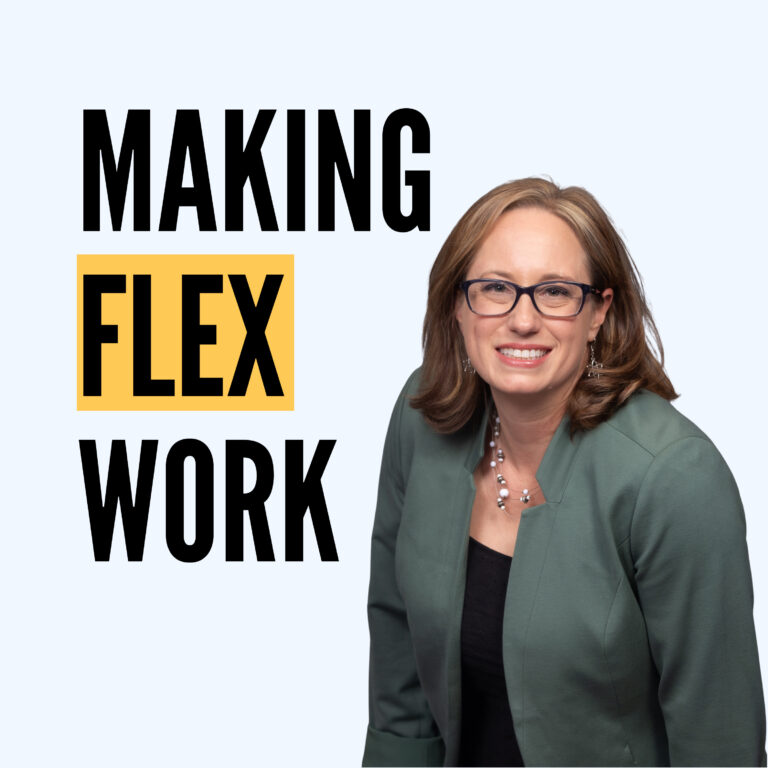
Wendy is a chemical engineer, the founder of Engineering Leadership Solutions, and the author of Making Flex Work: Defining Success on Your Own Terms and Reimagine Your Work. She spent about a decade following the prescribed path before she stopped to ask whether she wanted any of it. Then it took her eleven months to get her first flexible work arrangement — and once she had it, she got promoted more and faster than she had in the previous ten years.
This is a practical conversation. Wendy is an engineer, so her answer to ”my employer isn’t flexible” isn’t to feel less. It’s to bring data.
What we cover:
- Why most of us never even ask — and what she did instead of quitting
- The eleven-month fight for her first flexible arrangement, in a company that had a policy that wasn’t meant for people like her
- Why she hid it once she got it, and why she calls that naive now
- ”They said generally they would have given me a solid B plus” — the gap between how you grade yourself and how everyone around you sees you
- Defining success on your own terms, and why running four people’s scorecards at once guarantees you fail all of them
- Step one: seven days of journaling. Hours AND span — earliest start, latest stop. ”Six hours compressed feels very different than six hours across sixteen hours.”
- Why most people who feel overwhelmed are already working more than they’re paid for — so the first move usually isn’t part-time; it’s getting back to full-time
- The VP who works 6- 11 a.m. and 8 p.m.- midnight on purpose, because her peers are in Europe and her team is in Asia
- Why leaders resist: we never trained them to lead flexibly, and asynchronous work means they have to get the request right the first time
- ”Leading with your eyeballs” — and the people who are present, active, and completely unproductive
- Leveraging small changes: experiments so small nobody has to approve them. ”It’s like boiling a frog.”
- How to turn an emotional ask into a business proposal: this is what I want, this is what I know you need, here’s how we both get it
- The man near retirement whose wife found her dream house in another city — and how they turned his problem into a business case the company said yes to
- ”You own a business that sells exactly one product, and that product is you”
Find Wendy:
- makingflexwork.com — free templates, including an outline for building the business proposal she describes in this episode
- Engineering Leadership Solutions — her company
Connect with Limor:
Website: https://limorbergman.comPodcast: https://limorbergman.com/podcast/LinkedIn: https://www.linkedin.com/in/limorbergman/Substack: https://limorbergman.substack.com
Search terms: flexible work, part-time work, working mothers, women in tech, women in engineering, work life balance, negotiating flexibility, remote work, leadership, career growth, mom guilt, defining success